
"Coffee Quality Institute"
2000 article(s) found

Baristas must see! Q Grader certification from 2023 to increase the quantity and price!
Professional coffee knowledge exchange more coffee bean information please follow the coffee workshop (Wechat official account cafe_style) more boutique coffee beans please add private Wechat Qianjie coffee, WeChat: qjcoffeex yesterday, CQI (CoffeeQualityInstitute/)

Unique taste of Ecuador Hasunda Coffee Garden Flavor description of taste variety grinding degree introduction
The enthusiasm for introducing Ecuadorian boutique coffee to Chinese consumers led the Ecuadorian Export and Investment Promotion Agency (Pro Ecuador) and the welcoming Research Institute (InkaLab Coffee) to jointly organize this cultural experience event of Ecuadorian boutique coffee. The purpose of this activity is to raise Chinese consumers' awareness of Ecuadorian coffee and related food culture.

Colombia Coffee Growers Federation FNC receives important sustainability and quality awards
Weixin Official Accounts cafe_style) Colombia, May 17, 2018 (GLOBE NEWSWIRE)--In recent weeks, the Colombia Coffee Growers Federation (FNC) has received information from major players in the global coffee industry, such as the Rainforest Alliance, the Coffee Quality Institute and Professional Coffee

What is the Q-GRADER examination course Q Certification helps the sense of Coffee to correct the Taste of Q Certificate
Some people know better than others how to evaluate the quality of raw coffee. These people are Q Graders, who have passed the rigorous training of the Coffee quality Research Institute. This is a specific training, and the whole field of research will eventually add value to the starting point of the coffee value chain. Through Q Arabica and Q Robusta,Q programs have become trade tools for coffee around the world

The unique flavor of coffee is related to the growing environment. Air humidity and soil quality will affect the acidity of coffee.
For more information on coffee beans, please pay attention to the relationship between soil quality, humidity and organic acids (including citric acid, malic acid, acetic acid, fatty acid, chlorogenic acid) and inorganic acid (phosphoric acid) in coffee beans in the coffee workshop (Wechat official account cafe_style). The main results are as follows: (1) the volcanic rock producing area is easy to produce good coffee with good mellow and sour taste. The cup tester also found that come on.
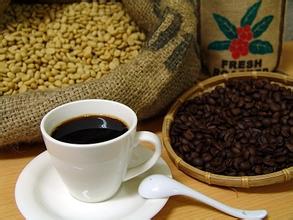
A brief introduction to the historical development of coffee in Taiwan to understand the reasons for coffee in Taiwan
In the 18th century, 1884 (10 years of Guang Xu), the British were introduced to trial planting in the three Gorges of Taipei. during the Japanese occupation era, the Japanese saw that Taiwan's climate and soil were suitable for coffee, so they introduced "Arabica" from abroad and successfully planted it in the north. They invested heavily in Zhiben and Mizuho, and the yield was good. In the 19th century, Taiwan had rich coffee output and good quality and flavor, which led to the complete victory period of coffee in Taiwan.
Types and characteristics of Coffee beans A genetic hybrid variety of Catuai coffee bred in Brazil
Professional coffee knowledge exchange more coffee bean information please follow the coffee workshop (Wechat official account cafe_style) Qianjie-Kaduai varieties introduction Arabica kind of coffee generally think that the cup originated from the Ethiopian plateau, widely distributed in the tropics, after repeated mutation and breeding, derived from many varieties. Now, it is said that Arabica coffee has more than 70 products.

Musk Coffee is not Kopi Luwak what's the difference between Musk Coffee and Musk Kopi Luwak
Communication of professional baristas Please pay attention to the Top Musk Coffee in the Coffee Workshop (Wechat official account cafe_style) innovative technological process Top Musk Coffee has always been synonymous with top coffee, but its production process has deterred many coffee lovers. Haodou Coffee combined with the professional biochemical team of Industrial Technology Research Institute to develop the process technology of extracorporeal musk coffee.

Large inventory of coffee varieties grown in Brazil what other varieties are there in Brazil besides bourbon coffee?
In Brazil, coffee cultivation is the subject of a great deal of research and development by national universities and institutions. To improve the quality, yield and resilience of coffee crops, agronomists, biologists and other researchers studied the best coffee varieties grown in each growing region of the country, usually breeding hybrids or breeding natural mutations. Some farms manage their own nurseries, and many growers also learn from the classics.
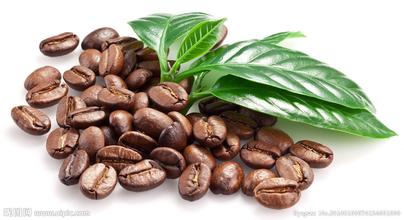
A brief History of Ethiopian Rosa Coffee
The species of Geisha was discovered in the Rose Summer Forest of Ethiopia in 1931 and sent to the Coffee Institute in Kenya; it was introduced to Uganda and Tanzania in 1936, in Costa Rica in 1953, and Panama was introduced in the 1970s by Francesca of Dongba Seven Farm Garden. Mr. Serraxin got the seeds from CATIE in Costa Rica and started growing Rosa Coffee because
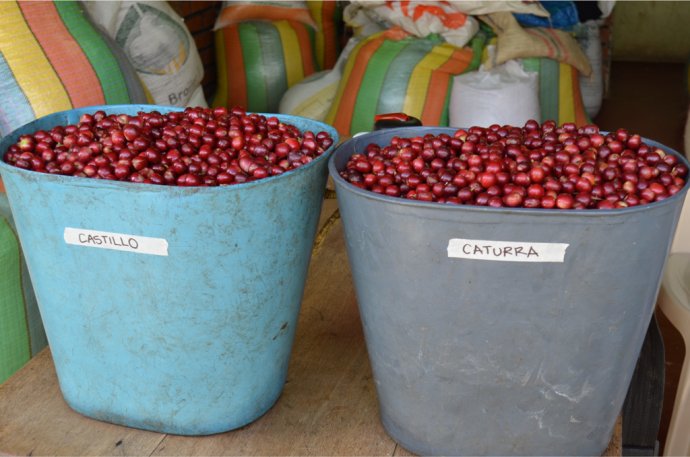
Arabica coffee varieties: Castillo Castillo Introduction
Professional barista exchanges, please pay attention to coffee workshop (Weixin Official Accounts cafe_style) Coffee varieties: Castillo Castillo introduced Castillo, or castillo variety, or castillo cultivar, is a coffee variety developed by Colombia Coffee Research Institute in 2005 based on enhanced plant disease resistance. It is currently the main cultivar in Colombia. ca

The introduction to Coffee textbook introduces the basic knowledge of coffee and the two skills of roasting and extraction.
Professional coffee knowledge exchange more coffee bean information please follow the coffee workshop (Wechat official account cafe_style) coffee books recommendation | popular science reader "Coffee Coffee everywhere" in addition to brewing coffee and making various coffee-related drinks, you can also learn more if you want to be promoted to become a coffee expert, this book will be the first book to accompany you to get started! The author Takuchi Junying for opening

Mexican coffee is an organic certified coffee. Mexican coffee beans are grown.
Professional barista communication please pay attention to the coffee workshop (Wechat official account cafe_style) drink a lot of organic coffee feel that something is missing, but since drinking Mexican organic coffee Chiapas, it does make me feel different, its aroma seems to put you in the forest in the fragrance, it is worth mentioning that Chiapas is also the 2004 SCAA American Coffee Institute

Coffee quality Society (cqi) and Yunnan Coffee Trading Center (yce) sign domestic partner agreement
The global authoritative coffee organization cqi (Coffee quality Society) and Yunnan Coffee Trading Center signed "Coffee quality Society (cqi) and Yunnan Coffee Trading Center (yce) Strategic Cooperation Agreement" and "Coffee quality Society (cqi) and Yunnan Coffee Trading Center (yce) domestic partner Agreement". Yunnan Coffee Trading Center has officially become the first domestic partner of Coffee quality Institute in China.

Costa Rican boutique coffee market Costa Rican coffee growing quality of Costa Rican coffee
Coffee exports account for 25% of Costa Rica's total exports. Costa Rica has also benefited from the establishment of the Central American Institute for Agricultural Research (TurrialbaoftheCentralAmericanAgriculturalResearchlnstitute, referred to as IAAC) in Tarasu, which is an important international research centre. Costa Rica's coffee industry was originally owned by the Costa Rican coffee industry.

Fashion quality of life rose summer coffee boutique coffee beans
The species Geisha was discovered in 1931 in Ethiopia's Guisha Forest and sent to the Coffee Institute in Kenya; introduced to Uganda and Tanzania in 1936, Costa Rica in 1953, Panama in the 1970s by Francesco de la Domba Seven Farm. Mr. Serrazin got seeds from CATIE in Costa Rica and started growing summer coffee, because

Why are Kenyan coffee beans all red? Historical Story and auction Department of Coffee cultivation and production in Kenya
How beans are processed: a specific agreement has been established during the processing of beans in Kenya, which can produce reliable and high-quality products, all processed by wet process. this tends to produce cleaner, brighter, more fruity cups. Kenyan coffee is mostly red because only fully mature red is selected during the picking process.

Coffee knowledge introduction to Brazilian coffee
Today, Brazil is the world's largest coffee producer. About 25% of the world's coffee comes from Brazil, which affects the development of the world coffee industry. Brazilian coffee is mainly grown in Parana, Santos Jing, Sao Paulo, Minas Gerais and Bahia. Most of the farms in these areas are less than ten hectares. According to the 2000 record, 71% of the farms in Minas Gerais are less than

Introduction to Brazilian Coffee
Today, Brazil is the world's largest coffee producer. About 25% of the world's coffee comes from Brazil, which affects the development of the world coffee industry. Brazilian coffee is mainly grown in Parana, Santos Jing, Sao Paulo, Minas Gerais and Bahia. Most of the farms in these areas are less than ten hectares.

Brazil Coffee Introduction The world's largest coffee producer
Today, Brazil is the world's largest coffee producer, with around 25% of the world's coffee coming from Brazil, influencing the development of the world's coffee industry. Brazilian coffee is mainly grown in Parana, Santos, Sao Paulo, Minas Gerais and Bahia, where the vast majority of farms are less than ten hectares in size. According to 2000 records: 71% of farms in Minas Gerais are less than